

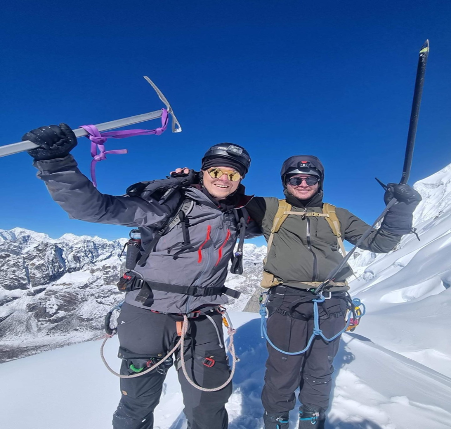
Nepal, often referred to as the roof of the world, is a wonderland for trekkers and climbers. With the mighty Himalayas forming a dramatic backdrop, this landlocked country offers not only the chance to witness the highest peaks on Earth but also to conquer some of them. Among the many mountaineering objectives available, three trekking peaks stand out for their popularity, accessibility, and challenge: Mera Peak, Island Peak, and Lobuche Peak.
These peaks offer adventure seekers an incredible opportunity to experience high-altitude climbing without the intense demands of full-scale expeditions. Whether you’re a beginner with dreams of standing above 6,000 meters or an experienced climber preparing for future expeditions, these mountains provide a thrilling taste of the Himalayas.
Mera Peak: A High-Altitude Ascent Into the Wild
Rising to an altitude of 6,476 meters (21,247 feet), Mera Peak is considered Nepal’s highest trekking peak. Situated in the remote Hinku Valley, east of the Everest region, Mera offers one of the best introductions to high-altitude mountaineering.
What Makes Mera Peak Special?
The main draw of Mera Peak is its elevation combined with accessibility. While high, the route to the top is not extremely technical. The ascent includes long days of trekking through forests, alpine meadows, and glaciated terrain, with most of the difficulty stemming from the thin air rather than technical obstacles.
Trekkers begin their journey with a scenic flight to Lukla, followed by days of hiking through rarely visited villages and peaceful trails. The isolation of the Hinku Valley adds to the expedition’s charm—fewer trekkers mean a more immersive experience with nature and culture.
Summiting Mera Peak rewards climbers with one of the finest viewpoints in the Himalayas. On clear days, climbers can admire Everest, Cho Oyu, Lhotse, Makalu, and Kangchenjunga—all of which exceed 8,000 meters.
Quick Facts:
- Region: Makalu-Barun National Park
- Difficulty: Physically demanding, but non-technical
- Best Season: March–May and September–November
- Ideal For: Fit trekkers aiming for their first high-altitude peak
Island Peak: A Himalayan Favorite Among Beginners
Not far from the popular Everest Base Camp trail lies Island Peak, officially known as Imja Tse. With a height of 6,189 meters (20,305 feet), it’s one of the most climbed trekking peaks in Nepal, thanks to its combination of accessibility, moderate technical challenge, and stunning alpine scenery.
The Allure of Island Peak
Island Peak gets its name because it appears like an island of rock and ice surrounded by glaciers when viewed from nearby Dingboche. It’s commonly climbed after the Everest Base Camp trek, serving as a perfect add-on for adventurers wanting to move beyond trekking into real mountaineering.
Though lower than Mera, Island Peak is considered more technically demanding. The final push to the summit includes climbing a steep ice wall using fixed ropes and navigating crevasses. For this reason, basic climbing knowledge—like how to use an ice axe and crampons—is recommended.
Culturally, Island Peak offers rich encounters with Sherpa communities. Villages like Namche Bazaar, Pangboche, and Tengboche provide a deep look into Himalayan Buddhist traditions, while the views of Ama Dablam and Lhotse during the approach are unforgettable.
Quick Facts:
- Region: Everest (Khumbu)
- Difficulty: Moderate to Technical
- Best Season: Spring and Autumn
- Ideal For: Trekkers with basic mountaineering skills
Lobuche Peak: The Hidden Gem Near Everest
Located close to the traditional Everest trekking route, Lobuche East stands tall at 6,119 meters (20,075 feet). It is part of the Lobuche massif, which includes a western and eastern summit. While Lobuche West is more technical and requires a separate permit, Lobuche East is classified as a trekking peak and has become increasingly popular among climbers.
Why Choose Lobuche Peak?
Lobuche is often considered more technical than both Mera and Island Peak. The route includes a mix of rock, ice, and snow climbing, with fixed ropes used on steeper sections. Therefore, climbers with some previous experience or those preparing for more demanding climbs (like Ama Dablam or even Everest) often choose Lobuche as a stepping stone.
The approach follows the standard Everest Base Camp trail, allowing for excellent acclimatization. Many itineraries include visits to Kala Patthar, Gorak Shep, or even EBC itself before heading to Lobuche High Camp.
Summiting Lobuche offers jaw-dropping views of Everest, Lhotse, Pumori, and the Khumbu Glacier below—making it one of the most scenic climbs in the region.
Quick Facts:
- Region: Khumbu (Everest Region)
- Difficulty: Technical and Steep
- Best Season: April–May, October–November
- Ideal For: Intermediate to advanced climbers
Training and Fitness
Preparation is essential. These peaks require excellent physical conditioning. A training regimen should include:
- Hiking with a loaded backpack
- Cardiovascular training (running, cycling, swimming)
- Strength training (legs, core, upper body)
- Basic mountaineering skills (especially for Island and Lobuche)
Additionally, high-altitude trekking experience is highly beneficial before attempting any of these climbs.
Conclusion: Adventure Above the Clouds
Climbing Mera Peak, Island Peak, or Lobuche Peak offers more than just a physical challenge—it’s a spiritual, cultural, and personal journey. You’ll walk in the footsteps of mountaineering legends, stay in villages where ancient traditions thrive, and test your limits in some of the world’s most stunning landscapes.
Whether you’re taking your first steps into alpine climbing or preparing for higher mountains, these three Himalayan peaks deliver unforgettable experiences, powerful lessons, and memories that will last a lifetime.
Contact Details
———————
Company address: Everest Trekking Routes Pvt. Ltd.
16 Khumbu, Nayabazaar, Kathmandu, Nepal
Mobile : +977-9843467921 (Rabin)
Email: [email protected]
URL:- www.everesttrekkingroutes.com
